

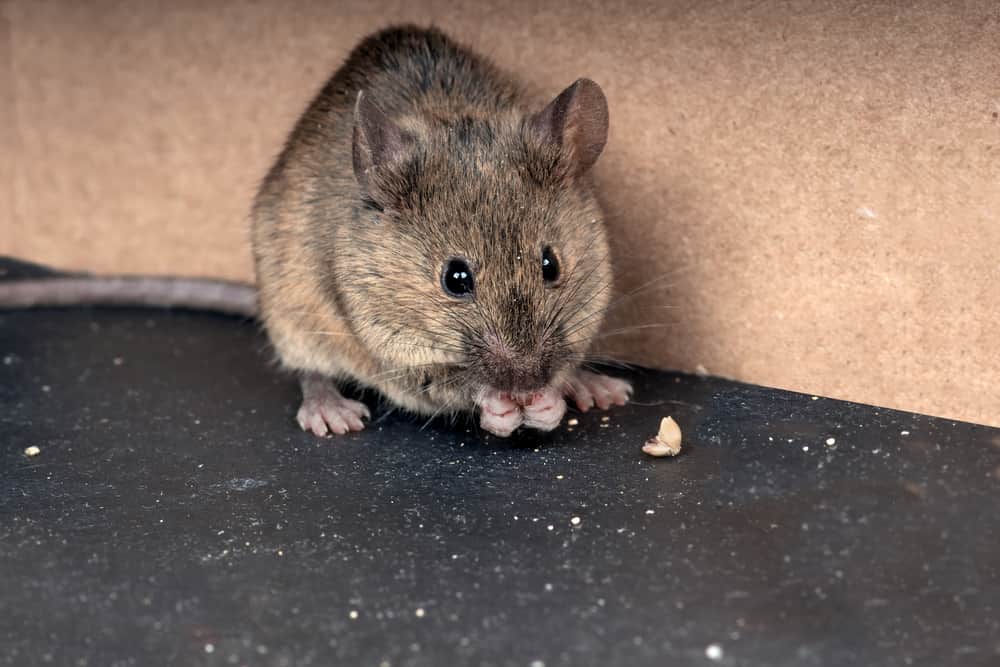
How to identify mouse droppings
Know how to spot mouse droppings in your home and learn what to do about them.
Content Updated: September 4, 2025
Key takeaways
- Mouse droppings resemble dark grains of rice, due to their small size and tapered ends.
- Mouse droppings are typically an eighth to a quarter of an inch in length.
- If you clean up mice droppings and new droppings appear after 24 hours, then you have an ongoing infestation on your hands.
- While it’s best to have a professional assist you in handling a serious mice infestation, taking a DIY approach to cleaning up mouse droppings is possible—you just have to be careful.
Jump to section:
What do mouse droppings look like?
Where to look for mouse droppings
How to get rid of mouse droppings
How to deal with a mice infestation
A single mouse scurrying through your house is already unpleasant enough, but a trail of mouse droppings is even worse.
Don’t wait for those little creatures to make a proper appearance before addressing a potential infestation. If you notice mouse droppings in your living space, act as soon as possible to help prevent the populations of these resourceful rodents from escalating.
What do mouse droppings look like?
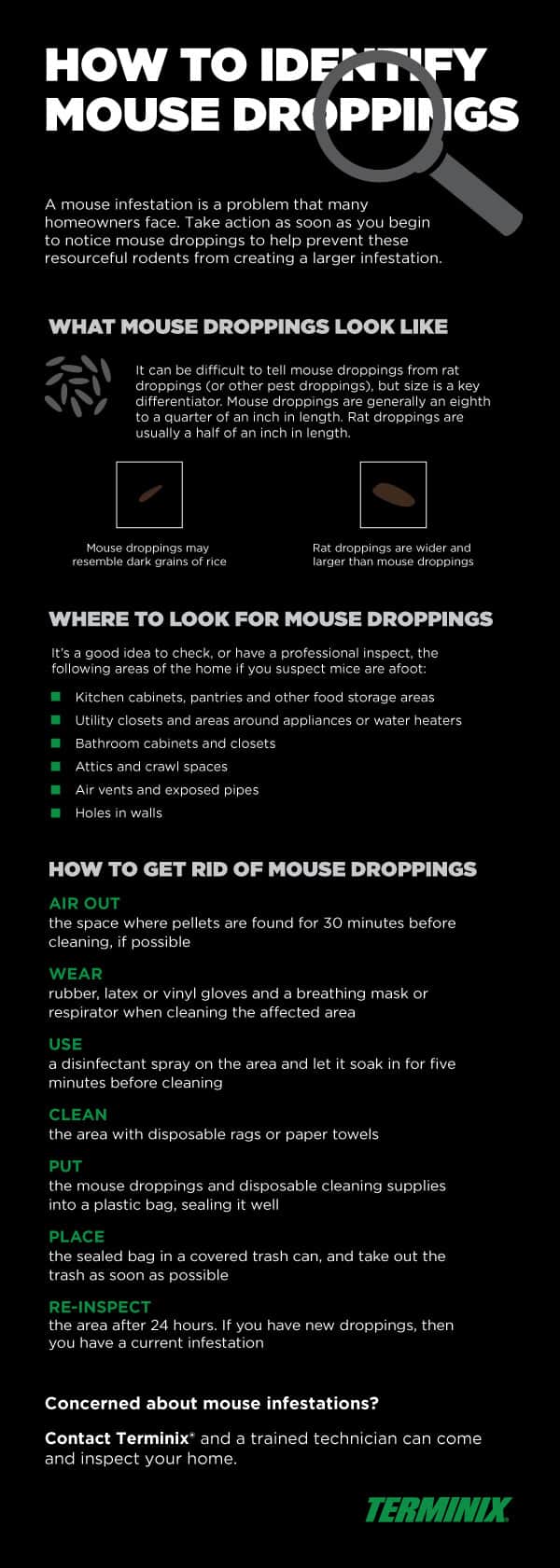
Mouse droppings are generally an eighth to a quarter of an inch in length and resemble dark grains of rice due to the ends being tapered. They tend to range from dark brown to black in color.
Size is a key differentiator when it comes to telling the difference between mouse droppings and droppings from rats or other pests. Rat droppings are usually a half of an inch in length, and they’re wider and larger than mouse droppings.
Despite what you may have heard, determining how old rodent droppings are is difficult, as the color often depends on diet, not age. The best way to determine if droppings are from an active mice population is to remove them, or have them professionally removed, and then re-inspect the area after 24 hours. If there are any new droppings, then you have an ongoing infestation.
Where to look for mouse droppings
Droppings are a common indicator of infestation, so if you suspect mice are afoot, it’s a good idea to check or have a professional inspect the following areas of your home for droppings:
- Kitchen cabinets, pantries, and other areas where food is stored or prepared
- Utility closets and areas around appliances or water heaters
- Bathroom cabinets and closets
- Attics and crawl spaces
- Any part of the home where there are air vents, exposed pipes, or holes in walls
Mice are nocturnal, so they aren't easy to spot right away. That's why the droppings they leave behind are a good indicator of their presence. Mice aren’t typically loners, either, so chances are there’s more than one mouse involved.
A mouse can produce between 50 to 75 droppings—also called pellets—in a single day. The extent of a mouse infestation can potentially be determined by the number of pellets you find and where you found them.
How to get rid of mouse droppings
To get rid of mouse droppings, the first thing you want to do is to remove the mouse or mice that are causing them. If you remove the droppings while the pests are still in your home, new droppings will likely arrive within the day. We recommend you have a professional help remove the mice and the droppings for the most reliable and efficient removal possible.
If you want to take the DIY approach, however, it’s important to be careful. Be sure to take the following precautions from the Centers for Disease Control and Prevention (CDC) to remove mouse droppings wherever you find them:
- Air out the space where pellets are found for at least 30 minutes before cleaning.
- Wear rubber, latex, or vinyl gloves and a breathing mask or respirator. Never touch the droppings with your bare hands.
- Use a disinfectant spray on the area and let it soak in for five minutes. You can also make your own version by mixing one part bleach to 10 parts water.
- Clean the area with disposable rags or paper towels.
- Put the mouse droppings and disposable cleaning supplies into a plastic bag; seal it well.
- Place the sealed bag in a covered trash can, and take out the trash as soon as possible.
- Re-inspect the area after 24 hours. If there are new droppings, then you have an ongoing infestation.
It’s also important to avoid sweeping or vacuuming up mice pellets before you’ve properly cleaned the area. Particles from mouse dander and droppings could become airborne, potentially making members of the household sick.
How to deal with a mice infestation
If your home is victim to an infestation, it’s critical to address any situation that may be making your house more inviting to mice. Be sure to take these preventative measures:
- Look for and close potential entry points mice can use to gain access to your home. Their bodies are flexible, and many can get through openings as small as a nickel or a dime.
- Since mice can chew through plastic, wood, wires, and insulation, be sure to close off any openings that give them access to these materials in walls or crawl spaces.
- Seal openings around pipes or cables that run through walls to the interior of the home.
- Limit access to food sources. Don’t leave dirty dishes in the sink or food crumbs on the floor, and seal food stored in cabinets and pantries securely. Foods in soft plastic bags, cardboard, and paper should be kept in heavy plastic containers.
- Keep pet food secured in a heavy plastic container, and don’t leave food in the bowl after your pet has finished eating.
- Don’t allow trash to pile up. Keep trash can lids closed both inside and outside the home.
- Clear clutter and debris around the home's exterior and garage.
- Stack firewood in a storage shed or elsewhere away from the main house.
If mice droppings keep appearing in your home despite your best efforts to keep those crafty critters out, or if you want help from an expert from the start, contact the professionals at Terminix.