
Spiders
What happens when a black widow spider bites you?
Content Updated: August 15, 2025
If you suspect a black widow spider bite, it's critical to consult with a healthcare provider for an accurate assessment. Reactions to spider bites vary widely among individuals, making self-diagnosis unreliable and potentially leading to incorrect treatment.
Black widow spiders are identifiable by their shiny black color and distinctive red hourglass marking on the underside of their abdomen. They often live in sheltered, undisturbed spots such as woodpiles and cluttered areas in garages and basements. Due to the potential health risks black widow bites pose, encountering these spiders around homes often calls for professional spider control services.
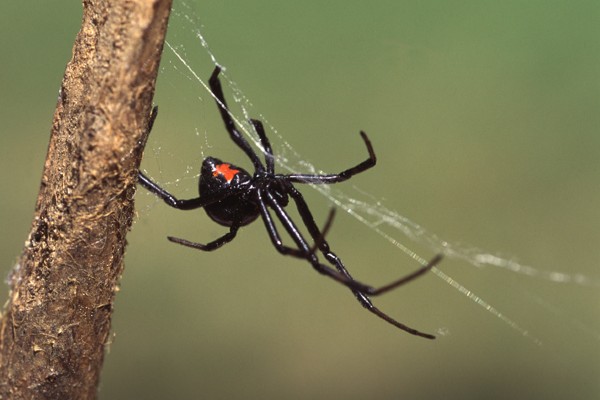
The venom in a black widow bite
The black widow spider has a reputation for its potent venom, which is considered among the most powerful of any spider. But don't worry, these arachnids aren't out to get you; they primarily use their venom to attack their prey, mostly insects. When a black widow bites, it injects venom through their fangs, breaking down the prey's tissue. While their bites can be pretty dangerous to humans, it’s essential to remember that they are generally shy and will only bite if they feel threatened.
What does a black widow bite look like?
Identifying a black widow spider bite can be crucial in seeking timely and appropriate medical attention. A key sign to look for is the twin puncture marks, often accompanied by a target-like lesion that can change over time. The size of the area affected by a black widow bite can vary significantly from person to person, often ranging from minimal to extensive swelling and redness. It's essential to monitor the spider bite for any progression of symptoms or changes in appearance and to consult medical professionals for proper treatment.
Black widow bite effects
When it comes to black widow spider bites, you might be surprised at how quickly symptoms can appear, sometimes within just a few hours. Initially, the bitten area may seem minimal, but it can rapidly develop into a larger, inflamed, and reddened region. Some people might experience intense pain, muscle cramps, and swelling at the bite site. While black widow bites can be severe and even potentially lethal, the good news is that most people recover just fine with prompt medical attention.
Stages of a black widow spider bite
Symptoms of a black widow bite may not be immediately apparent but can develop quickly. The black widow spider’s venom can affect a victim's nervous system; the symptoms depend on the amount of venom and the victim's sensitivity. Often, the first sign is slight swelling and redness at the site of the spider bite. Within a few hours, the victim might experience other stages of a black widow bite, including:
- Muscle pain and cramping: Significant muscle pain and cramping can start near the bite site and spread to involve larger muscle groups, particularly in the abdomen.
- Nausea and vomiting: The venom of a black widow can affect the nervous system, leading to nausea, vomiting, and sometimes diarrhea.
- Increased blood pressure: Some people may experience a spike in blood pressure due to the body's reaction to the venom.
- Sweating and chills: These symptoms arise as the body reacts to the toxin, leading to sweating or chills.
- Headache and dizziness: The venom can contribute to general malaise, headaches, and dizziness.
- Difficulty breathing: In severe cases, the venom may cause muscle cramping in the chest, making breathing difficult.
If you exhibit symptoms of a black widow spider bite or believe you have been bitten, it is imperative to seek medical attention immediately. Even if the symptoms appear mild initially, they can quickly escalate, requiring prompt medical intervention.
How to help prevent black widow spiders
Preventing black widow spiders from entering your home requires a keen focus on making your living environment less appealing to these potentially hazardous creatures. Adopting a few simple measures can significantly reduce the likelihood of encountering a black widow spider bite, thus protecting yourself and your loved ones. Here’s how to help prevent black widow bites:
- Eliminate clutter: Reducing clutter in garages, attics, and basements can limit spider nesting spots. Wear gloves when sourcing wood from a wood pile or getting items from a barn or shed.
- Seal cracks and openings: Perform regular checks around your home for cracks and openings to help deter spiders from entering.
- Regular cleaning: Regular sweeping, vacuuming, and decluttering can discourage spiders from making your home theirs.
- Careful storage: Store items in sealed containers rather than cardboard boxes to help eliminate hiding spots for spiders.
If you are worried about the potential of a black widow spider bite, it's essential to seek professional intervention promptly.
At Terminix, we understand the severe nature of spider bites and the immediate concern they bring to your household's safety and comfort. Turn to Terminix for professional spider control services, or try our PestFree365+ plan1 for year-round protection from 39 household pests, including black widow spiders.
1Treatments and Covered Pests defined in your Plan. Limitations apply. See Plan for details.